
Korea’s viral dessert cycle moves fast. Dubai chewy cookies dominated first. Then came frozen jelly. But one 2026 trend has proved surprisingly difficult to dislodge: butter tteok (버터떡).
The baked rice-cake dessert first took off in Korea in early spring. Months later, it is still selling at scale, suggesting this may be more than another two-week social-media obsession.
What exactly is butter tteok?
Despite the name, butter tteok is quite different from the steamed or pounded rice cakes many visitors associate with Korean tteok.
It is typically made with glutinous rice flour, butter, milk, eggs and sugar, then baked. The appeal is mostly about texture: a browned, slightly crisp exterior gives way to a dense, elastic, mochi-like centre.
You may also see it called butter mochi, butter rice cake or Shanghai butter tteok. Its exact origin story is messy. Korean coverage has linked the trend to Shanghai, while the dessert also resembles Hawaiian butter mochi and Filipino bibingka. The safer description is that Korea has enthusiastically adopted and remixed the format.
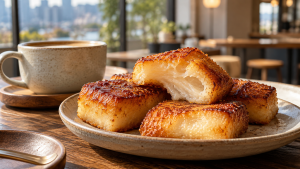
The trend didn’t disappear after spring
Butter tteok began spreading rapidly through Korean cafés and social media around March. At the time, ingredient sales offered an early clue: one Korean retailer reported glutinous-rice-flour sales rising more than 100% year on year as people started making the dessert themselves.
What makes the trend more interesting now is its staying power.
Mega MGC Coffee launched its own version in April. By late August, the chain said it had sold more than 5 million pieces in roughly four months. Originally intended as a limited menu item, it was extended through December after continued demand, according to Korea JoongAng Daily.
For a Korean dessert trend, that is a meaningful second act.
Why Korea keeps choosing “chewy”
Butter tteok is also part of something broader happening in Korean food.
Recent dessert hits have repeatedly centred on texture: Dubai chewy cookies, mochi-style breads, chewy ice cream and modern rice cakes. Korea JoongAng Daily recently described stretchiness and chewiness as a defining feature of the country’s current dessert boom.
That matters because the flavour itself does not need to be especially unusual. Butter tteok’s ingredients are familiar. The novelty arrives when you bite into it.
It is also relatively inexpensive and easy for cafés and chains to adapt, which helps explain why it has travelled further than many hyper-local viral desserts.
Should you try it?
Yes, especially if you like mochi, chewy rice cakes or desserts that are more about texture than heavy sweetness.
Look for 버터떡 on café and bakery menus. Versions vary considerably, so expect different shapes, levels of crispness and flavours rather than one definitive recipe.
And unlike some Korean food trends that vanish almost as soon as they arrive, this one should still be relatively easy to find during autumn 2026.
The ThisKovery Take
The interesting story is no longer simply that butter tteok went viral.
It is that it survived being viral.
In a Korean dessert market where trends can now turn over in weeks, millions of sales and an extended run into December suggest butter tteok may be graduating from internet curiosity to café staple.