
Korea’s traditional clothing is having a moment, and this week the celebration extends far beyond palace photographs.
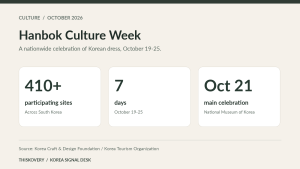
From October 19 to 25, Hanbok Culture Week 2026 brings exhibitions, fashion shows, performances and hands-on experiences to more than 410 locations across South Korea.
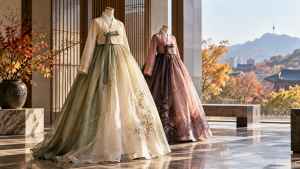
The nationwide programme marks its ninth edition this year, with a central celebration in Seoul on October 21, Hanbok Day. For international visitors, it’s an opportunity to discover how Korea’s traditional clothing continues to evolve.
1. What is Hanbok Culture Week?
Hanbok is Korea’s traditional dress, recognised for its distinctive silhouettes, flowing lines and colour combinations.
While hanbok is often associated with historical dramas, weddings and traditional ceremonies, contemporary designers are finding new ways to incorporate its construction and aesthetics into everyday fashion.
Hanbok Culture Week celebrates both sides of that identity. Organised by the Korea Craft & Design Foundation under the Ministry of Culture, Sports and Tourism, the programme aims to make hanbok more visible and accessible in contemporary life.
Rather than concentrating activities in one venue, the festival connects hundreds of participating locations throughout Korea.
2. The main celebration takes place in Seoul
The central event is scheduled for October 21, from 5 p.m. to 6:30 p.m., at the National Museum of Korea’s Open Plaza in Yongsan.
The programme includes commemorative performances and a hanbok fashion show. Other activities across the country include exhibitions, cultural experiences and opportunities to learn about traditional clothing.
For visitors interested in fashion design, the festival offers more than an opportunity to wear hanbok for photographs. It’s a chance to observe the details that distinguish Korean clothing, including fabric, layering, proportions and decorative techniques.
3. Even convenience stores are joining the celebration
One particularly interesting development is the participation of familiar Korean consumer brands.
The official Hanbok Culture Week programme lists a collaboration involving GS25, T-money and Kakao, bringing the celebration into everyday consumer spaces and services.
A separate Hanbok Pass initiative runs from October 19 to 31, extending beyond the main festival week. Specific participation conditions and benefits should be checked through the official programme.
These collaborations suggest that hanbok is increasingly being presented not only as ceremonial clothing, but as a recognisable part of contemporary Korean identity.
It’s another example of traditional culture finding new audiences through modern retail and lifestyle platforms.
4. How can international visitors participate?
The National Museum of Korea is a convenient starting point for travellers staying in Seoul.
The main commemorative event is free to attend, although some associated activities may have separate booking arrangements.
Visitors outside Seoul can use the official festival website to explore participating locations by region and date. The website includes an event calendar and interactive map covering the nationwide programme.
For anyone interested in Korean fashion, October 21 is particularly worth noting. Official information: Hanbok Culture Week.
The ThisKovery Take
Hanbok’s international appeal has often been shaped by K-dramas and palace tourism. But the more interesting development is happening beyond those familiar images.
From contemporary fashion design to consumer-brand collaborations, hanbok is increasingly becoming part of how Korea expresses its identity today.
Related on ThisKovery
Sources: Hanbok Culture Week official site; Official programme listing.