
For years, the classic Han River picnic meant fried chicken, instant noodles and a drink beside the water. This autumn, Seoul has added something unexpected to the menu: fresh sashimi.
Koreans are calling it 회크닉 (hoe-nic), a combination of hoe, the Korean word for sliced raw fish, and picnic. The idea is simple. Buy freshly prepared seafood from a market, take it to the riverside and enjoy it outdoors. But the trend reveals something interesting about how younger Koreans are turning ordinary outings into experiences worth planning.
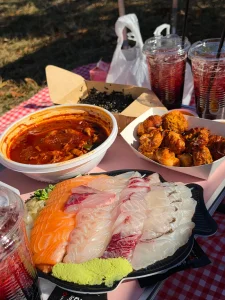
1. What exactly is a hoe-nic?
A hoe-nic usually starts at a seafood market. Friends choose fish such as gwang-eo (광어, olive flounder) or chamdom (참돔, red sea bream), ask the seller to prepare it for takeaway, and collect their order. Then they head to a nearby park with a picnic mat, sauces and side dishes.
The most frequently reported route connects Noryangjin Fisheries Wholesale Market with Yeouido Hangang Park. Other popular riverside destinations include Nodeulseom and additional Hangang parks.
The attraction isn’t only the meal. Selecting the fish, collecting the takeaway box and arranging the picnic have become part of the outing itself.
2. Why is everyone talking about it?
The trend has gained momentum on Korean social media, where users share seafood orders, riverside photographs and suggested routes. Local reporting provides some evidence that the interest goes beyond a handful of viral videos.
According to an October 4 report in Dong-A Ilbo, Naver search interest for 회크닉 approximately doubled over two weeks in September. The newspaper also reported that arrivals of farmed olive flounder at Noryangjin increased from 12,060 kilograms in the first week of September to 17,361 kilograms in the fourth week.
Those figures do not prove that picnics caused the increase in seafood volumes, but they illustrate the wider attention surrounding the trend.
3. How to try it yourself
Start at Noryangjin Fisheries Wholesale Market, accessible from Noryangjin Station. Browse the seafood stalls, compare prices and ask whether the seller can prepare the fish for takeaway.
A useful phrase is “포장 가능해요?” (Pojang ganeunghaeyo?), meaning “Can I get this to go?” Confirm the total price, portion size, sauces and preparation time before paying. Then travel to Yeouido Hangang Park or another permitted picnic area.
A picnic mat, wet wipes and a rubbish bag will make the experience easier. Prices depend on the species, weight, season and seller, so avoid relying on a single social-media price quote.
4. A few practical details matter
Raw seafood requires more care than fried chicken. Buy from a reputable seller, keep the fish properly chilled during transport and eat it promptly. If you cannot keep it cold, choose a cooked alternative. Avoid leaving food in direct sunlight or carrying it around for hours before eating.
Dispose of packaging responsibly and follow the park’s rules on food, waste and permitted picnic equipment. October’s cooler weather may make outdoor dining more comfortable, but it does not eliminate food-safety risks. The trend is also seasonal. The experience depends on weather, daylight and the availability of suitable seafood.
The ThisKovery Take
Hoe-nic is a good example of how Korean trends can emerge without a new product or a celebrity endorsement. It takes two familiar things, a seafood market and a riverside picnic, and combines them into a fresh social experience. For visitors, it’s also an invitation to discover a side of Seoul that rarely appears in standard sightseeing itineraries.