
If you are planning an autumn trip to Korea in 2026, timing matters. The Korea Forest Service expects fall colour to spread from the northern mountains in early October, with much of the country reaching peak foliage later in the month.
The useful part is that Korea’s autumn does not peak everywhere at once. That gives travellers a surprisingly long window if they know where to go.
When will Korea’s fall foliage peak in 2026?
According to the Korea Forest Service’s 2026 foliage forecast, the first autumn colour was observed at Jeombongsan in mid-September. Northern Gangwon mountain areas are expected to change first, followed by central and southern Korea.
For individual destinations, the forecast puts Seoraksan around October 20, Songnisan around October 28, Naesangsan around November 4 and Hallasan around November 6.
Across tree species, peak colour is expected around October 30–31 for ginkgo, maple and oak. The Korea Forest Service defines peak foliage as the point when roughly half of the leaves have changed colour.
Where should you go?
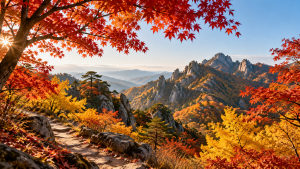
Seoraksan is the obvious early choice. Its dramatic granite peaks and mountain trails make it one of Korea’s classic autumn destinations, but its northern location also means the colour arrives earlier than in Seoul.
For a later trip, Naesangsan is famous for dense maple colour and is forecast to peak in early November. Hallasan on Jeju offers an even later window.
If you are staying in Seoul, you do not necessarily need a mountain expedition. Late October is the more useful period to watch, especially as ginkgo and maple colour develops across the city’s parks, palace grounds and tree-lined streets.
Why late October is the sweet spot
The national forecast suggests that 2026’s peak is running only slightly later than the recent five-year average, by about 0.8 days.
That makes the final third of October a particularly practical period for international visitors: Seoraksan should already be colourful, central Korea should be moving toward peak conditions, and Seoul’s autumn landscape should be developing quickly.
Just remember that foliage is weather-sensitive. Temperature, rainfall and elevation can move the best viewing period by several days, so treat forecast dates as a planning guide rather than an appointment.
What to know before you go
Popular mountain destinations can become extremely busy during peak weekends. If autumn colour is a priority, a weekday visit is usually the calmer option.
Also bring layers. October can feel mild in Seoul during the day while mountain mornings and evenings are considerably cooler.
For travellers who can stay flexible, the best strategy is simple: choose your region first, use the official forecast as your baseline, then check local conditions shortly before travelling.
The ThisKovery Take
Korea’s autumn is less a single “fall foliage week” than a wave moving south through the country.
That is good news for travellers. From Seoraksan in October to Hallasan in November, you have several chances to catch it. If you are choosing just one window for Seoul plus a day trip, however, late October 2026 is the one we would circle.
Source: Yonhap News Agency, reporting the Korea Forest Service’s 2026 foliage forecast.