
In Korea, breakfast doesn’t always mean sitting down for a full meal. Sometimes it’s a small tray of rice rolls picked up on the way to work.
That everyday habit has become a significant retail trend. On October 15, convenience-store chain CU announced that its get Morning mini gimbap range had surpassed four million units sold since launching in January 2026.
The numbers reveal something interesting about how Koreans are eating, and what international visitors might want to try.
1. Small rice rolls, surprisingly big sales
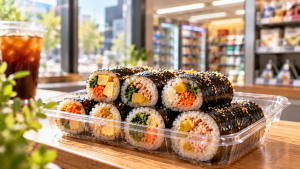
Gimbap is one of Korea’s most familiar everyday foods. Rice and fillings are rolled in dried seaweed and sliced into convenient pieces.
CU’s kkoma gimbap, meaning mini gimbap, adapts that idea into a smaller, easy-to-carry breakfast. The range belongs to CU’s get Morning series, which also includes muffins, sandwiches and porridge.
According to CU, mini gimbap accounts for 68% of the series’ sales revenue. The retailer also reported that its overall gimbap sales increased 19.4% during January–September 2026 compared with the same period a year earlier.
These figures suggest that compact rice-based meals are finding a place in Korea’s busy morning routines.
2. Korea’s breakfast shopping hours are changing
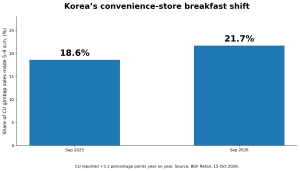
CU reported that the proportion of its gimbap sales made between 5 a.m. and 9 a.m. rose from 18.6% in September 2025 to 21.7% in September 2026. That’s a 3.1-percentage-point increase.
The strongest mini-gimbap sales came from residential neighbourhoods, roadside locations, office districts and university areas.
Younger consumers were particularly important. Shoppers in their twenties accounted for 32.1% of sales, followed by customers in their thirties and forties.
For students, commuters and office workers, a small ready-to-eat meal offers an alternative to a larger breakfast that requires preparation or more time.
3. International visitors are discovering it too
CU says foreign customers purchased more than 100,000 units of its mini gimbap.
For travellers, convenience stores are often an accessible introduction to everyday Korean food. They provide packaged meals, snacks and drinks without requiring restaurant reservations or knowledge of a complicated menu.
Mini gimbap is particularly approachable because it’s familiar in format, easy to carry and available in small portions.
On October 14, CU expanded the range with a half-and-half tuna-and-ham variety, adding another option for shoppers.
4. How to try mini gimbap in Korea
Look for the Korean words 꼬마김밥 or get모닝 in CU’s refrigerated ready-meal section. Products and availability may differ by store, and the range can change over time.
If you’re unfamiliar with Korean convenience-store food, check the ingredient and allergen information on the packaging, especially for seafood, eggs, soy or processed meat.
Mini gimbap is worth trying alongside other everyday convenience-store favourites, including triangle gimbap, sandwiches and seasonal snacks.
The ThisKovery Take
Korea’s convenience-store food culture is evolving beyond emergency meals and late-night snacks. CU’s mini-gimbap success suggests that small, practical breakfasts are becoming part of how people manage busy mornings.
For international visitors, it’s another reason to explore Korea’s convenience stores as a window into everyday life.
Related on ThisKovery
Sources: Yonhap News, October 15, 2026; MoneyToday, October 15, 2026.