
Korea already had 빵지순례, or “bread pilgrimage,” where people travel to famous bakeries just to try one particular pastry.
Now there is 떡지순례.
The word combines tteok, Korean rice cake, with seongjisunre, pilgrimage. And increasingly, people are travelling across cities, queuing before opening and sharing maps online to find the rice cakes everyone is talking about.
This is not traditional holiday tteok having a nostalgic comeback.
It is rice cake being rebuilt as a modern dessert.
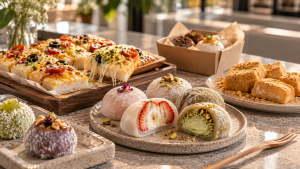
Pizza seolgi changed the image of tteok
One of the clearest examples is pizza seolgi.
Instead of using bread dough, shops take soft white baekseolgi rice cake and top it with tomato sauce, cheese and ingredients such as ham, corn, bulgogi or sweet potato.
The combination sounds unusual until you consider what makes it work: the rice cake is mild enough to carry savoury toppings, while its soft, slightly chewy texture makes the experience completely different from ordinary pizza.
The trend spread rapidly through short-form video and social media during 2026, creating queues at specialist rice-cake shops in Seoul and elsewhere. Some customers have even made repeated trips after products sold out before they could buy them, according to Newsis.
Then came the “tteok open-run”
The language around the trend says almost as much as the food.
Koreans are now talking about 떡픈런, or “tteok open-run,” for arriving before a shop opens, and even 떡켓팅, combining tteok with the frantic experience of buying concert tickets.
That sounds exaggerated until you look at the numbers.
A September rice-cake event at Emart24 stores in Seongsu sold roughly 26,000 items in four days, with customers queuing before opening. Its bulgogi pizza seolgi sold through the first day’s stock before lunchtime, according to MoneyToday.
Rice cake is behaving less like a ceremonial food and more like the newest Seoul dessert drop.
Convenience stores are taking the trend mainstream
And now the convenience stores have arrived.
CU is introducing pizza jeolpyeon, using chewy sliced rice cake as the base for tomato sauce, mozzarella, pepperoni, corn and olives.
GS25 is meanwhile expanding its filled chapssaltteok range after a yogurt version became a major hit. That product reportedly sold around 700,000 units, while searches related to it on the retailer’s app reached about 6 million.
This matters because convenience stores change the scale of a trend.
Something that originally required travelling to a famous neighbourhood shop can suddenly be tried close to home.
Why tteok fits Korea’s current dessert mood
The timing is almost perfect.
One of Korea’s strongest dessert trends in 2026 has been texture, particularly foods described as jjolgit-jjolgit, or pleasantly chewy.
Butter tteok, chewy cookies and modern chapssaltteok all fit that appetite.
According to Korean trend analysis, online posts describing tteok specifically as a dessert rose more than 40% year on year between January and August 2026.
So the interesting shift is bigger than one viral pizza-shaped rice cake.
Tteok is moving from “traditional food” to dessert platform.
The ThisKovery Take
Tteok never disappeared from Korea.
What changed is who is excited about it, how it looks and where people are buying it.
A traditional rice cake can now become a viral café product, an open-run destination and then a convenience-store snack within months.
That makes 떡지순례 more than a cute Korean internet phrase.
It is evidence that one of Korea’s oldest foods is learning how to behave like one of its newest trends.
Related on ThisKovery: What Is Butter Tteok?, What Is Dotorimuk?, and Korea’s Convenience Stores Have Already Switched to Winter Mode.